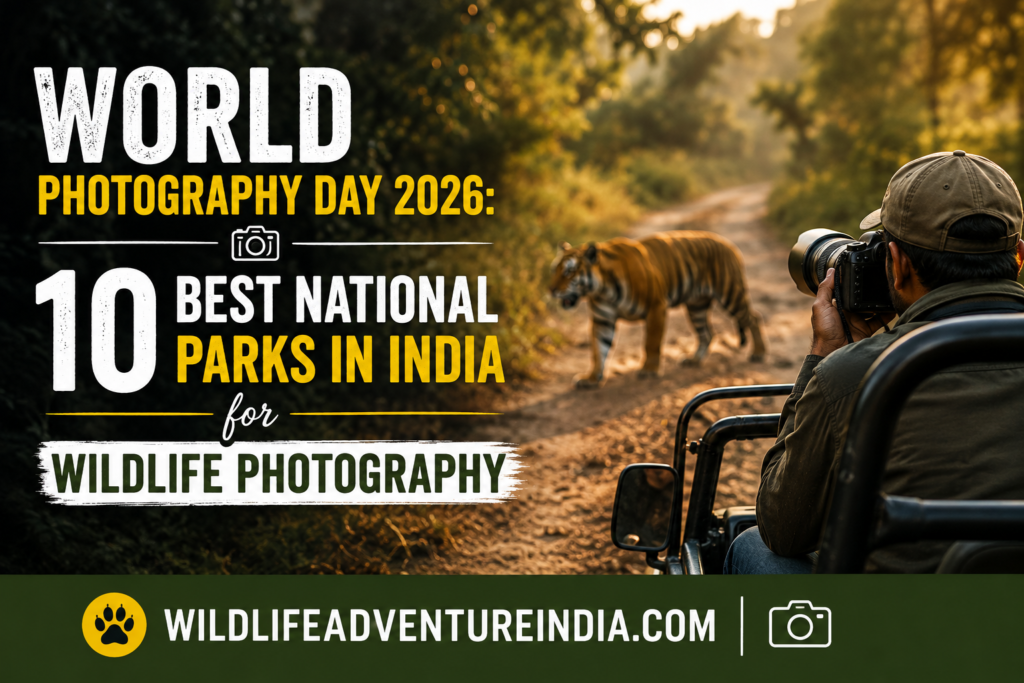
Every August 19, photographers around the world celebrate World Photography Day — a day that reminds us why we pick up a camera and step into the wild. If you are someone who has dreamed of photographing a tiger in golden morning light, or capturing a one-horned rhino wading through tall elephant grass, India is where those dreams actually come true.
India is home to over 100 national parks, 58 tiger reserves and For curated safari experiences across these parks, Wildlife Adventure India is a trusted resource for planning your wildlife trip. some of the most diverse wildlife ecosystems on the planet. Whether you are a seasoned wildlife photographer or someone just starting out, this country offers a shot that can genuinely change the way you see nature. This World Photography Day 2026, here are the 10 best national parks in India for wildlife photography — each one a world of its own.
Ranthambore National Park, Rajasthan — Best for Tiger Photography
Ask any wildlife photographer in India where they would go first, and most will say Ranthambore, like almost immediately. The tigers here are famously laid back around safari gypsies, so you end up with these longer , calm encounters, not the usual quick flash through the trees.
What makes Ranthambore really different is the whole background, the backdrop, the setting. There’s this ancient 10th-century fort, plus shallow lakes, and dry deciduous forests all together, and somehow it just feels cinematic, even before you lift the camera. You can photograph a Bengal tiger lounging near the ruins of a medieval fort, and honestly, it’s hard to imagine any other place on Earth where that kind of frame is possible, or the same kind of scene.
Best time to visit: October to March for comfortable weather; April to June for the highest tiger sighting frequency near waterholes.
Jim Corbett National Park, Uttarakhand — Best for Elephant and Tiger Photography
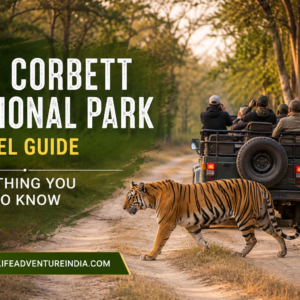
Jim Corbett is India’s oldest national park and one of the most rewarding destinations for wildlife photography. The Ramganga River flowing through the park turns golden at dawn and dusk, giving photographers some of the most beautiful natural light you will find anywhere in the country.
Corbett National Park is often called the “Land of Trumpets and Roar” for good reason. Large elephant herds, Bengal tigers, leopards, and over 600 bird species all share this extraordinary forest. If you want variety in a single trip, Corbett delivers like few other parks can.
Best time to visit: November to June. February to May is the peak window for big cat sightings.
Kaziranga National Park, Assam — Best for One-Horned Rhino Photography
Kaziranga is basically where you go if you want to photograph the Indian one-horned rhinoceros, and honestly nowhere else on Earth gives you sightings like this. It’s a UNESCO World Heritage Site, kind of shaped by the Brahmaputra River. Kaziranga’s grasslands , wetlands and even the forests together hold the world’s largest group of this endangered species.
And the elephant safari…that part is iconic. You sit for a ride through tall elephant grass at dawn, then suddenly you are face to face with rhinos at this unbelievably close range. In Assam, during winter mornings the light is soft and warm, it just sits there in a way that is perfect for portrait style wildlife shots.
Best time to visit: November to April when the park is open and wildlife is most active.
Bandhavgarh National Park, Madhya Pradesh — Best for Tiger Density
If your main aim is photographing tigers , then Bandhavgarh has among the highest tiger densities of any national park in India. You’ll often get sightings that are amazingly common, so it keeps pulling serious wildlife photographers back year after year.
Alongside the big cats, the place feels kind of layered, with old caves, rocky hills, and dense sal forests, all of which add texture to wildlife frames. Besides tigers you can also run into leopards, sloth bears, and sambar deer, and that whole checklist usually won’t really let you down.
Best time to visit: March to June for tiger photography; October to February for pleasant weather and bird photography.
Kanha National Park, Madhya Pradesh — Best for Meadow Wildlife Photography
Kanha is where Rudyard Kipling set The Jungle Book, and standing inside its vast open meadows, it is easy to see why. The park is famous for the barasingha (swamp deer), a species it brought back from the edge of extinction.
For photographers, Kanha’s combination of open meadows and dense sal forests creates stunning compositional variety. You can photograph barasingha grazing in morning mist, then follow a tiger trail into the forest — sometimes in the same safari drive.
Best time to visit: March to June for wildlife sightings; October to February for green landscapes and birdwatching.
Tadoba Andhari Tiger Reserve, Maharashtra — The Rising Star
Tadoba has, kinda, quietly become one of the most talked-about places for wildlife photography in India. Its compact size and this surprisingly high tiger density mean sightings feel more reliable than in some of the larger parks. Also, the lakes inside the reserve make that mirror-like water reflection, so you get those dramatic tiger shots near waterholes, not just “pretty” but kinda intense, you know.
And it’s not only tigers around. Tadoba is home to leopards, wild dogs, sloth bears, gaur, and a really rich mix of birds. So if you’re a photographer craving action with steady frequency, this is a solid pick.
Best time to visit: February to May. The dry season concentrates wildlife beautifully around water.
Pench National Park, Madhya Pradesh and Maharashtra — Best for Wild Dogs
Pench is a lesser-crowded alternative to Kanha and Tadoba, but it punches well above its weight for wildlife photography. It is one of the best places in India to photograph the Indian wild dog (dhole), a pack hunter that is incredibly photogenic in action.
Tigers, leopards, and gaur are regularly sighted here, and the teak and bamboo forest creates a beautiful natural frame for every shot. Early morning light filtering through the forest canopy makes Pench a paradise for atmospheric photography.
Best time to visit: March to June for wildlife; October to February for birds and scenery.
Gir National Park, Gujarat — Only Place to Photograph the Asiatic Lion
Gir is basically the final wild home for the Asiatic lion, so it’s a 100% rare stop for wildlife photography anywhere across the world. The dry teak forests where you actually photograph these lions create pictures that feel totally different, like, from anything you will run into in Africa.
Devalia Safari Park inside Gir gives you a bit more managed, almost intimate encounter, especially if you want close up lion portraits. And beyond that, Gir also has leopards, sambar, chital, blackbuck, plus a lot of raptors, all kind of share the same landscape, in their own quiet way.
Best time to visit: December to March for the most comfortable conditions and excellent lion activity.
Sundarbans National Park, West Bengal — Best for Mangrove and Tiger Photography
Sundarbans is kind of unlike any other park on this list. The world’s largest mangrove delta is home to the Royal Bengal Tiger, but over here you photograph from a boat, drifting silently through tidal creeks, So yeah, the vibe changes completely. You get misty mornings, saltwater channels, and this quiet awareness that a tiger can show up near the tree line at literally any moment. Because of that every frame feels wired with tension.
Sundarbans also rewards bird photographers with kingfishers, eagles, and waterbirds in numbers that are hard to match elsewhere in India.
Best time to visit: November to February when the weather is cooler and wildlife movement is higher.
Nagarahole National Park, Karnataka — Best for South Indian Wildlife Photography
Nagarahole, part of the Nilgiri Biosphere Reserve, is one of South India’s finest wildlife photography destinations. The park sits alongside the Kabini reservoir, and the shoreline draws elephants, gaur, leopards, and tigers to the water’s edge — particularly during April and May.
The Kabini backwaters are legendary among wildlife photographers. When the water level drops in summer, large herds of elephants gather here in the evening light, creating some of the most extraordinary wildlife photography opportunities in the country.
Best time to visit: March to June for Kabini shoreline wildlife; October to February for green landscapes and birdwatching.
Quick Photography Tips for Your India Safari
For wildlife photography the best light tends to show up during those golden hours—like early morning, around 5:30 AM to 9:00 AM, then again later in the day from 4:00 PM to 6:30 PM. If you’re focusing on mammals, a telephoto lens in the 200–400mm range really helps, and birds aim for 400mm or even more. Also bring spare batteries and extra memory cards, just in case, because you never know. Try wearing subdued, earthy shades: khaki , olive, or brown. And please remember, drones are strictly prohibited inside all Indian national parks.
FAQs
October to April is broadly the best period. March to June gives the highest tiger sighting rates near waterholes.
Standard safari permits cover personal photography. Commercial filming or tripod setups need separate clearance from park authorities.
A 200–500mm or 100–400mm telephoto zoom gives the best versatility for most Indian wildlife situations.
Kaziranga National Park in Assam is the undisputed best destination for one-horned rhino photography in the world.
Yes, fully safe when conducted with licensed guides following all forest department rules.
Absolutely. Many wildlife photography tours in India cater to all skill levels, with naturalist guides helping with camera settings and animal behaviour.
Kaziranga, Keoladeo (Bharatpur), Jim Corbett, and Pench are all excellent for bird photography in India.
Book 60 to 90 days in advance during peak season. Parks like Ranthambore and Corbett fill up quickly.
Conclusion
World Photography Day 2026 is like a little nudge that the wild is always waiting, if you show up with your camera and a bit of patience. India’s national parks aren’t only places for wildlife either, they are kind of living classrooms where every safari (no matter how short or long) teaches you something new, about light, behaviour and the natural world—kind of all at once.
Whether you book a tiger photo safari in Ranthambore, hunt for rhinos in Kaziranga, or softly drift through the mangroves of Sundarbans, each park hands you images and memories that linger, even long after you are back home.