
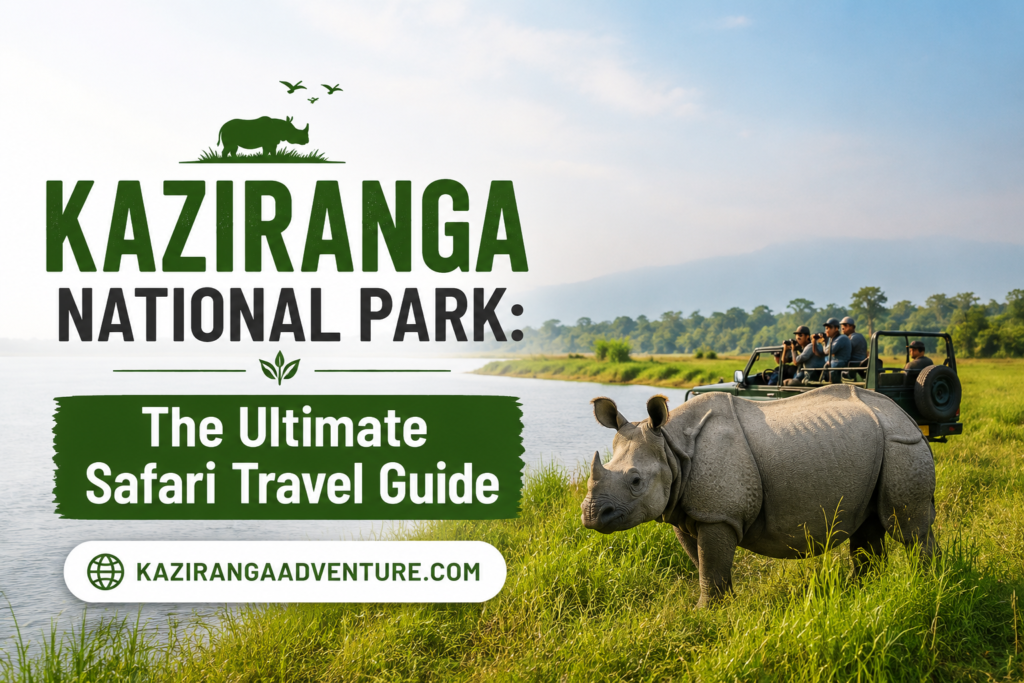
If you have ever dreamed of watching a one-horned rhinoceros graze freely in open grasslands while a wild elephant wanders nearby, Kaziranga National Park in Assam is where that dream becomes real. There is nowhere else on earth quite like this place, and once you visit, you understand exactly why.
Kaziranga spreads across roughly 430 square kilometers, along the floodplains of the Brahmaputra River, and it is a UNESCO World Heritage Site too. It shelters two thirds of the entire world’s one-horned rhino population, so the place feels pretty special. The park was also declared a Tiger Reserve back in 2006, which makes it one of those few spots in India where you can actually spot both a rhino and a Royal Bengal tiger in the same visit. That sort of outing is rare, you know, and it is exactly why wildlife lovers from all over the world keep coming to this corner of Northeast India, every single year.
What Makes Kaziranga Special
Kaziranga National Park is home to the famous Big Five — the Indian one-horned rhinoceros, Royal Bengal tiger, Asian elephant, wild water buffalo, and swamp deer. Beyond these headline animals, the park shelters hog deer, capped langurs, smooth-coated otters, Hoolock gibbons, and over 480 species of birds, including rare migratory ones that fly in from Central Asia every winter.
The park sits between the Brahmaputra River to the north and the Karbi Anglong Hills to the south. This geography creates a stunning mix of tall elephant grass, wetlands, swampy lagoons, and dense forest — all in one place. That variety of habitat is why Kaziranga holds so much wildlife in such a concentrated area.
Since the 1960s, when the rhino population had dropped to around 600, conservation efforts have been extraordinary. By 2024, that number had climbed to over 2,600 rhinos — a genuine success story that reflects the commitment of the forest department, local communities, and wildlife conservationists working together over decades.
The Four Safari Zones
Kaziranga National Park is divided into four tourism zones, and each one offers a completely different experience. Choosing the right zone matters, so here is a simple breakdown.
The Central Zone, also called the Kohora Zone, is probably the most popular spot and also a really good first starting point for first time visitors. In this area Rhino sightings are nearly sure, and you still have a nice chance of seeing wild buffalo, swamp deer , and tigers as well. You can do both jeep safari and elephant safari here, depending on what you prefer.
The Western Zone, or Bagori Zone, is especially loved for its open waterholes and dense grasslands. Rhinos and elephants gather here in large numbers, and there is even a rare chance of spotting a golden tiger. Both jeep and elephant safaris run from this zone.
The Eastern Zone, known as the Agaratoli Zone, is a paradise for birdwatchers and wildlife photographers. The wetlands and water bodies here attract the Greater Adjutant Stork, Fishing Eagle, Brahminy Duck, and many other species. Only jeep safari is available in this zone.
The Burapahar Zone kinda feels like the quietest, most away from the crowd experience inside the park. Tucked in hilly, forested land it comes across as the best spot in Kaziranga to catch Hoolock Gibbons, which are the only apes that actually live in India. You can also see Hornbills and capped langurs pretty often, and trekking on a forest trail is available exclusively in this zone, so it’s like a special corridor for walkers, without the usual noise.
Gypsy Safari vs Elephant Safari
The jeep safari, often called a gypsy safari in Kaziranga, is the most popular way to explore the park. You go deep into the zone in an open 4×4 vehicle with a trained guide. Jeep safaris run in two time slots — morning from around 7:30 AM and afternoon from around 1:30 PM. Each session lasts roughly two hours, and up to six people can share one jeep.
The elephant safari is kind of a completely different experience. Going on the back of a trained elephant, during the early morning hours, puts you right at ground level with the grasslands, and the wildlife nearby sort of just… barely responds to you. That’s why elephant safaris often end up giving the closest looks at rhinos. Usually, these elephant safaris run only in the morning, and they are offered in the Central and Western zones. Since the number of places is very limited, advance booking is strongly recommended .
For the best Kaziranga safari booking experience, booking online ahead of your visit through an authorized operator saves you a lot of hassle, especially during peak season when slots fill up fast.
Kaziranga Safari Timings
Jeep safari timings at Kaziranga are generally 7:30 AM to 9:30 AM, 9:30 AM to 11:30 AM, 1:30 PM to 3:30 PM, and 2:30 PM to 4:30 PM, depending on the season. Elephant safari slots run in the early morning only.
Best Time to Visit Kaziranga
The park is open from November to April, mostly speaking. If you’re wondering when to go, Kaziranga National Park is usually best between November and February, because the weather turns cool and easy, the tall elephant grass has dried up so you get clearer sightlines, and migratory birds arrive in big numbers. You’ll also notice wildlife sightings are at their highest during those months, overall.
March and April are warmer but still good for tiger and rhino sightings near water bodies. The park closes completely from June to October because of Brahmaputra flooding. Do not plan a trip during monsoon season as no safari activities are possible.
Getting to Kaziranga
Kaziranga is located about 204 km from Guwahati in Assam. The drive from Guwahati takes around four to five hours and is a genuinely scenic road trip through Assam’s countryside. The nearest airport is at Jorhat, around 100 km away. Trains to Furkating or Jakhalabandha also bring you close to the park, after which a short road transfer gets you to the main entrance at Kohora.
Things to Do Beyond the Safari
A trip to Kaziranga is not only about the wildlife, I mean it’s big but also not the whole story. The Kaziranga National Orchid and Biodiversity Park near Kohora shows more than 500 orchid species, and it ends up being a pretty nice little pause either before or after your safari. Then there’s Kakochang Waterfall, which sits between tea gardens and forest, so it feels like a gentle short detour. If you want a totally different angle, take boat rides on the Brahmaputra River, the landscape looks really different from there. Also around the area the Assam tea estates invite you in for guided tours, where they walk you through the tea making process from start to finish. And if you’re visiting in January, local Bihu performances and everyday Assamese village life bring a warm cultural layer, like suddenly the trip feels more living than watching.
Where to Stay
There are hotels and resorts of every type near Kaziranga, from budget guesthouses to premium eco-resorts. Most are clustered along the National Highway near Kohora, which gives you easy access to all four safari zones. Booking accommodation close to the Central Zone is ideal if you want to catch the morning elephant safari without an early-morning drive.
FAQs
A: Yes, absolutely. Kaziranga offers one of the best wildlife experiences in Asia, with near-guaranteed rhino sightings and a real chance of spotting tigers.
A: The Central Zone (Kohora) is the best starting point — highest wildlife density, both safari types available, and easy access.
A: One-horned rhinos, Royal Bengal tigers, Asian elephants, wild water buffalo, swamp deer, Hoolock gibbons, and over 500 bird species.
A: The park typically reopens in late October or early November every year.
A: Two to three days is ideal, allowing one safari in each of two or three zones and a bit of time to explore the surroundings.
Conclusion
Kaziranga National Park is not only a wildlife reserve, it is one of India’s most inspiring conservation stories, where nature has actually been given some room to mend and flourish. You can visit the rhinos, tigers, birds , or honestly just to stand in a scenery that feels completely unspoiled. In any case Kaziranga usually gives you more than you thought it would. Plan early, try to lock in your safari in advance, and aim for the months between November and February, that is when the experience turns out best. After you have seen a one horned rhino about five metres away, in that morning haze, everything else starts looking like just a normal day.
